Ceramic tile floors are a popular choice for kitchens, entryways, bathrooms, and living spaces because they are durable, water resistant, and relatively easy to maintain. Unlike wood floors that can warp or carpets that trap stains and odors, tile floors hold up well under daily foot traffic. However, low maintenance does not mean no maintenance. Learning the best way to mop tile floors is essential if you want them to stay glossy, hygienic, and beautiful for years.
Even though tile is tough, improper cleaning methods can dull the surface, discolor grout, and leave behind sticky residue. This comprehensive guide explains how to mop tile floors correctly, how often to clean them, what tools and products work best, and how to keep grout looking fresh. By following these practical steps, you can achieve professional level results right at home.
Why Proper Tile Floor Mopping Matters
Many homeowners mop their tile floors regularly but still end up with cloudy surfaces, stained grout lines, or floors that feel gritty underfoot. This often happens because dirt is spread around instead of being removed, or too much detergent is used.
Proper mopping removes abrasive particles that can wear down the tile glaze over time. It also prevents bacteria buildup in grout lines and improves the overall appearance of your home. When done correctly, mopping tile floors does more than clean, it protects your investment.
How Often Should You Mop Tile Floors
Sweep More Often Than You Mop
One of the most important tile floor cleaning tips is sweeping frequently. Grit, sand, and crumbs act like sandpaper on tile surfaces. Sweeping or vacuuming at least three to four times a week helps prevent scratches and dullness.
Ideal Mopping Frequency
For most homes, mopping once a week is sufficient. High traffic areas like kitchens, entryways, and bathrooms may need mopping two to three times per week. Spills should always be cleaned immediately to prevent staining and sticky buildup.
Remove Loose Debris Before Mopping
Never introduce water to a dirty floor. This is a common mistake that leads to muddy residue and dirty grout.
Before mopping, always:
-
Sweep with a soft bristle broom
-
Use a vacuum with a hard floor setting
-
Pay attention to corners and edges where dust accumulates
Removing loose debris first ensures that mopping actually cleans instead of spreading dirt.
Choose the Right Mop for Tile Floors
Best Mop for Tile Floors
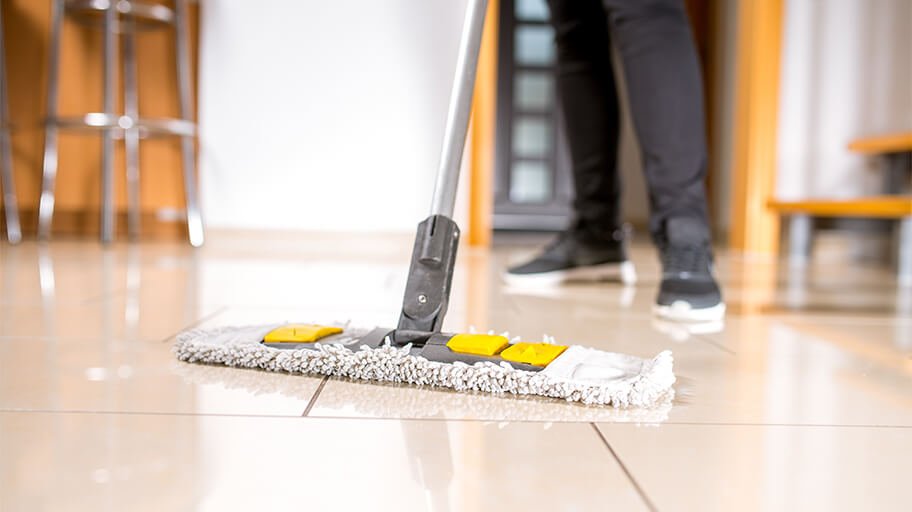
A rag mop or chamois mop is the best option for tile floors. These mops absorb dirty water effectively and lift grime out of grout lines.
Avoid sponge mops because they push dirty water into grout, making discoloration worse over time.
Microfiber Mop Option
Microfiber mops are also excellent for ceramic tile. They trap dirt effectively, require less water, and dry quickly, reducing streaks and water spots.
Use the Right Cleaning Solution
Avoid Excess Detergent
Using too much soap is one of the fastest ways to ruin the appearance of tile floors. Soap residue builds up and creates a hazy film that dulls shine and attracts dirt.
A simple and effective solution includes:
-
Warm water with a small amount of mild dish soap
-
A pH neutral tile cleaner
-
A mixture of water and a small amount of vinegar for non stone tiles
If haze appears, remove it with an all purpose cleaner or a mild acid like fresh lemon juice diluted in water.
Change Mop Water Frequently
Dirty mop water spreads grime instead of removing it. Change the water as soon as it becomes cloudy. This is especially important for large rooms or heavily soiled floors.
Mop Tile Floors from Back to Front
Always plan your exit before you start mopping. Begin at the farthest corner of the room and work your way toward the door. This prevents stepping on freshly cleaned tile and leaving footprints behind.
Mop in small sections and rinse the mop frequently for best results.
Dry the Floor for a Spot Free Finish
Air drying often leaves water spots and streaks. After mopping, buff the floor dry with a clean lint free cloth or towel.
To make this easier:
-
Place the cloth on the floor
-
Use your foot to slide it around
-
Focus on high shine areas for a polished look
Drying also prevents slipping and protects grout from excess moisture.
Best Way to Clean Tile Grout
Why Grout Needs Special Care
Grout is porous and absorbs grease, spills, and dirt much faster than tile. This is why grout lines often darken even when the tile looks clean.
You do not need to clean grout every time you mop, but occasional deep cleaning makes a dramatic difference.
Homemade Grout Cleaning Solution
Skip harsh commercial cleaners and try this effective homemade method:
-
Mix baking soda and water to form a thick paste
-
Apply the paste directly to grout lines
-
Rub it in gently and let it sit overnight
The next morning:
-
Wet a stiff nylon brush
-
Scrub the grout using circular motions
-
Rinse thoroughly with clean water
Repeat for a few days if needed until grout returns to its original color.
Seal Grout for Long Term Protection
Once grout is clean and dry, apply a silicone based grout sealer. This creates a protective barrier that repels stains, grease, and moisture, making future cleaning much easier.
Common Tile Mopping Mistakes to Avoid
To get the best results, avoid these common errors:
-
Using too much water
-
Allowing dirty water to sit on the floor
-
Skipping regular sweeping
-
Using abrasive scrubbers on tile
-
Ignoring grout maintenance
Small changes in technique can dramatically improve the appearance and lifespan of your tile floors.
Long Term Tile Floor Maintenance Tips
Proper mopping is just one part of tile care. To keep floors looking new:
-
Use doormats at entrances to trap grit
-
Clean spills immediately
-
Avoid wax based cleaners
-
Use furniture pads to prevent scratches
-
Deep clean grout every few months
With consistent care, ceramic tile floors can stay bright and beautiful for decades.
Final Thoughts on the Best Way to Mop Tile Floors
Learning the best way to mop tile floors is not complicated, but it does require the right tools, products, and habits. By sweeping often, using minimal detergent, choosing the right mop, and caring for grout properly, you can maintain floors that look professionally cleaned year round.
A little routine attention goes a long way toward keeping your tile floors clean, safe, and stunning.