Reusable water bottles have surged in popularity over the past decade. From sleek stainless steel options to colorful plastic alternatives, more people are choosing reusable bottles to stay hydrated, support their health, and reduce single-use plastics. While these bottles are convenient and eco-friendly, they require proper maintenance. One of the most common challenges of owning a reusable water bottle is keeping it clean. Without proper cleaning, bacteria, mold, and unpleasant odors can develop. This guide provides detailed, practical, and easy-to-follow methods to clean water bottles effectively, ensuring both your health and your bottle’s longevity.
Why Proper Water Bottle Cleaning Matters
Even if you only fill your bottle with water, residue, bacteria, and mold can accumulate inside over time. Experts warn that a reusable bottle can become a breeding ground for germs if neglected. According to food safety specialists, dark, moist environments like the inside of a water bottle are ideal for bacteria growth. Regular cleaning not only prevents unpleasant smells and slimy residue but also reduces the risk of potential infections or stomach issues.
By following proper cleaning methods, you can:
-
Maintain the safety of your drinking water
-
Extend the life of your bottle
-
Avoid unpleasant odors or tastes
-
Protect your health and hygiene
How Often Should You Clean Your Water Bottle?
Daily cleaning is recommended even if you only use your bottle for water. Look for signs like a slimy film, odd odors, or visible residue—these indicate that bacteria and germs are multiplying inside. Experts advise that frequent washing is the best policy to maintain both hygiene and bottle quality.
Even dishwasher-safe bottles should receive periodic hand washing to ensure that all hidden crevices are scrubbed, including lids and straws.
Step-by-Step Methods to Clean a Water Bottle
Whether your bottle is dishwasher-safe or not, there are several effective ways to clean it thoroughly. Here are the three most popular and reliable methods:
1. Baking Soda Method
Baking soda is an excellent natural cleaner that helps remove odors and bacteria.
Steps:
-
Mix equal parts baking soda and water to form a 50-50 solution.
-
Pour the solution into your water bottle.
-
Let it soak for 10 minutes.
-
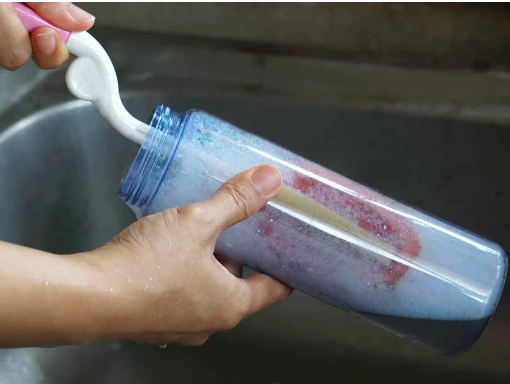
Use a bottle brush or sponge to scrub the inside thoroughly.
-
Shake the bottle vigorously with the lid on to reach all areas.
-
Rinse thoroughly under running water.
Baking soda works well for stainless steel, glass, or plastic bottles and is especially effective for neutralizing unpleasant smells.
2. Vinegar Method
White vinegar is a natural disinfectant that kills bacteria and removes stains.
Steps:
-
Fill the bottle with 1/4 cup of white vinegar and 1/4 cup of water.
-
Shake well and let the solution sit overnight.
-
In the morning, scrub the bottle with a brush or sponge.
-
Shake once more to loosen any remaining residue.
-
Rinse thoroughly with warm water.
Vinegar is particularly useful for deep cleaning or when a bottle has developed stubborn odors.
3. Dish Soap Method
Dish soap is a simple yet effective cleaning agent for daily use.
Steps:
-
Fill the bottle with hot water.
-
Add a few drops of dish soap.
-
Shake well to mix.
-
Let it sit for 1 to 2 hours.
-
Use a brush to scrub the inside and rinse thoroughly.
This method is gentle enough for daily cleaning and works well for all types of bottles, including plastic, glass, and stainless steel.
Cleaning Lids, Caps, and Straws
A bottle is only as clean as its components. Lids, caps, and straws often harbor hidden bacteria.
Tips for cleaning lids and caps:
-
Use a toothbrush or cotton swab with dish soap to reach small crevices.
-
If dishwasher-safe, place the lid on the utensil rack vertically to ensure proper cleaning and drainage.
Tips for cleaning straws:
-
Use a straw cleaner brush with hot water and dish soap.
-
Shake or scrub thoroughly to remove trapped residue.
-
Dishwasher-safe straws should also be placed vertically for optimal cleaning.
Extra Tips for Maintaining Your Water Bottle
-
Avoid leaving water in the bottle overnight
Standing water encourages bacterial growth. Empty and rinse bottles at the end of the day. -
Use a bottle brush regularly
Brushes reach areas that your hand or sponge cannot, including corners and curves. -
Deep clean weekly
Even with daily cleaning, perform a thorough soak with vinegar or baking soda once a week to prevent buildup. -
Store bottles upside down to dry
Proper drying prevents moisture from lingering and reduces the risk of mold. -
Replace old components
Worn-out lids, caps, or straws should be replaced promptly to maintain hygiene.
Benefits of Keeping Your Water Bottle Clean
Proper cleaning does more than prevent bad smells. Regular maintenance offers several health and practical benefits:
-
Protects against gastrointestinal illnesses
-
Eliminates unwanted odors and flavors
-
Extends the lifespan of your bottle
-
Supports overall personal hygiene
By making water bottle cleaning a daily habit, you can enjoy clean, fresh water anytime while also contributing to a cleaner environment by reusing bottles instead of disposable plastic ones.
Final Thoughts
Maintaining a clean reusable water bottle may seem tedious, but the benefits are undeniable. From reducing germs and unpleasant odors to prolonging your bottle’s life, daily and weekly cleaning routines are a small investment with a big payoff. Whether you choose baking soda, vinegar, or dish soap, the most important step is consistency.
Remember to clean every part of the bottle, including lids and straws, and follow the best practices outlined above. With these tips, you can enjoy safe, clean water while supporting a sustainable lifestyle.